
Trauma-Informed Mental Health Workshops for Staff & Frontline Teams in the North West
Rise Through Lived Experience – Practical Tools, Real Healing
Supporting Staff: Trauma-Informed Mental Health Workshops for Frontline Teams
Staff and volunteers working across health, social care, education, charities, hospitality, and community services are often supporting others while carrying significant emotional responsibility themselves. Operating within complex systems shaped by trauma, inequality, and increasing demand can place sustained pressure on wellbeing, confidence, and team connection.
At Fynix Project, we deliver trauma-informed mental health workshops for staff and frontline teams across the North West. Our lived-experience-led training provides practical, body-based tools that help professionals recognise stress responses, regulate in high-pressure environments, and prevent burnout before it escalates.
We understand that workforce wellbeing is shaped by lived realities - including trauma exposure, compassion fatigue, systemic inequality, grief, chronic stress, and organisational pressures. That’s why our workshops go beyond awareness, equipping teams with actionable strategies for emotional regulation, boundary-setting, and sustainable resilience.
Our sessions create psychologically safe, non-judgemental spaces where staff can pause, reflect, and release emotional load without clinical language or forced disclosure. Grounded in trauma awareness and practical application, we focus on recognition, regulation, and release - tools that work in real time, not just in theory.
Using creative and embodied approaches such as guided writing, breathwork, reflective dialogue, and nervous system regulation techniques, we help teams understand how stress is stored in the body, recognise early warning signs of burnout, and rebuild balance within demanding environments.
By strengthening staff well-being and emotional safety, our trauma-informed workshops support healthier workplace cultures, improved communication, reduced burnout risk, and more sustainable care across organisations in the North West.
Trauma-Informed Practice Workshop for Staff & Frontline Teams
A Trauma-Informed, Evidence-Informed Workforce Development Programme
The Trauma-Informed Practice Workshop is a full-day, trauma-informed and evidence-informed workforce development programme designed to strengthen how staff understand, interpret, and respond to behaviour, emotional distress, and psychological need within frontline environments.
Developed by Fynix Project, this workshop supports organisations to move beyond behaviour management alone and adopt a trauma-informed approach to behaviour, communication, and support, recognising that behaviour is often shaped by trauma, stress, adversity, and perceived threat.
This programme equips staff with practical trauma-informed tools, communication strategies, and emotional regulation techniques that can be applied immediately within real-world settings.
What the Trauma-Informed Practice Workshop Covers
This structured, full-day workshop provides a trauma-informed learning journey that builds understanding safely and progressively, including:
- Introduction to trauma-informed practice and psychological safety
- Understanding trauma, stress, and behaviour through a trauma-informed lens
- Nervous system awareness, including fight, flight, freeze, shutdown, and fawn responses
- Behaviour as communication and what sits underneath behavioural presentation
- Trauma-informed communication and de-escalation strategies
- Emotional regulation and co-regulation in practice
- Staff self-awareness, triggers, and professional response
- Psychological safety within teams and workplace culture
- Building trust, consistency, and relational safety
- Reflection, integration, and real-world application
The workshop combines trauma-informed theory, nervous system education, and practical application, ensuring learning is directly transferable into frontline roles.
Trauma-Informed & Evidence-Informed Approach
This workshop is fully trauma-informed in both design and delivery, meaning participants experience the same principles they are encouraged to apply in practice.
The programme is grounded in:
- Trauma-informed practice frameworks
- Behavioural and psychological safety research
- Nervous system and stress response education
- Emotional regulation and communication models
- Real-world frontline experience and lived insight
Delivery is:
- Psychologically safe and structured
- Non-clinical and accessible
- Reflection-based and interactive
- Professionally boundaried and emotionally contained
Participants are not required to share personal experiences, ensuring a safe and inclusive learning environment.
Who This Workshop Is For
This trauma-informed workshop is designed for organisations and teams working within:
- Health & Social Care
- Housing & Homelessness Services
- Local Authorities
- Education and youth settings
- Community and voluntary sector organisations
- Frontline and support services
It is particularly relevant for staff supporting individuals experiencing:
- Trauma and adversity
- Emotional distress and dysregulation
- Behavioural complexity
- Safeguarding concerns
- Crisis or high-pressure situations
Learning Outcomes
By the end of the Trauma-Informed Practice Workshop, participants will:
- Understand behaviour through a trauma-informed lens
- Recognise nervous system responses and escalation patterns
- Apply trauma-informed communication and de-escalation strategies
- Support emotional regulation using practical techniques
- Improve confidence when responding to distress and behavioural complexity
- Strengthen reflective practice and professional awareness
- Contribute to psychologically safe, trauma-informed environments
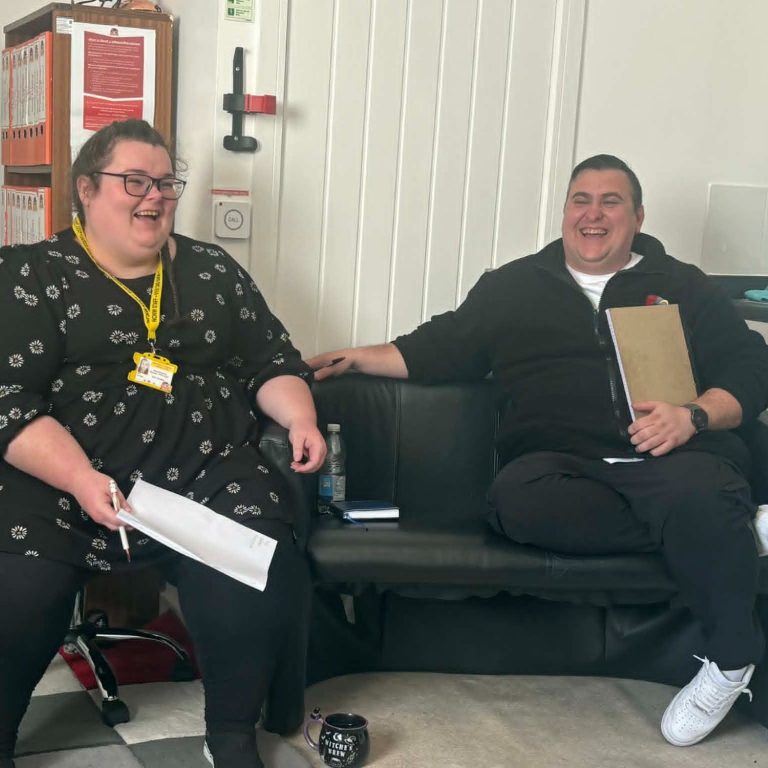
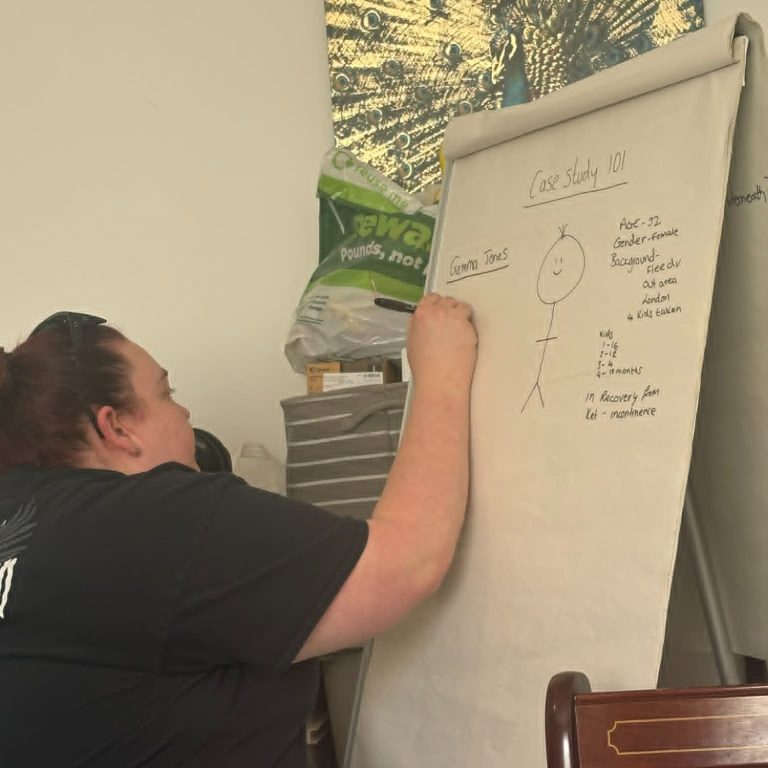
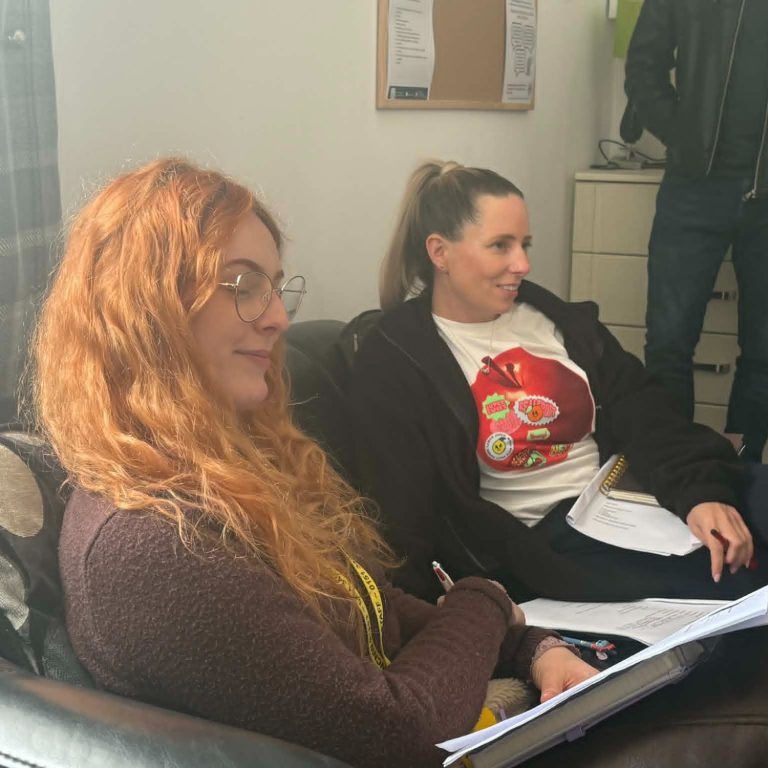
Nightstop Communities Northwest Widnes CIC taking part in our Trauma-Informed Practice Workshop for Staff & Frontline Teams.
Download Workshop Information
A detailed overview of the trauma-informed workshop, including purpose, structure, learning outcomes, and organisational benefits
A full, commissionable delivery framework outlining module structure, safeguarding integration, and practical application
A comprehensive commissioning document aligned with policy, workforce development, and organisational priorities
Trauma-Informed Workplace Culture, Communication & Inclusion
A Trauma-Informed, Evidence-Informed Workforce Culture & Communication Programme
The Trauma-Informed Workplace Culture, Communication & Inclusion Workshop is a structured, trauma-informed and evidence-informed workforce development programme designed to support organisations in building a healthier workplace culture, psychologically safer communication, stronger inclusion awareness, and emotionally safer team environments.
Developed by Fynix Project, this programme supports organisations to move beyond policy alone and explore how workplace culture is shaped daily through communication, behaviour, emotional safety, leadership, inclusion, team dynamics, and psychological safety.
This workforce-focused programme recognises that communication challenges, conflict, workplace tension, burnout, and team disconnection are often influenced by stress, pressure, nervous system activation, differing communication styles, emotional overload, and psychologically unsafe environments.
The workshop provides participants with practical workplace communication tools, reflective learning, trauma-informed approaches, emotional intelligence awareness, and psychologically safer communication strategies that can be directly applied within real-world workforce environments.
What The Trauma-Informed Workplace Culture, Communication & Inclusion Workshop Covers
This structured programme provides a practical and psychologically safe learning journey that supports healthier workplace interaction, communication awareness, inclusion, and reflective workforce development, including:
- Introduction to trauma-informed workplace culture and psychological safety
- Understanding workplace communication, stress, and behavioural responses
- Communication under pressure and emotionally aware interaction
- Psychological safety within teams and organisational culture
- Professional boundaries, accountability, and respectful workplace communication
- Emotional intelligence, self-awareness, and behaviour under stress
- Communication styles, personality differences, and workplace misunderstanding
- Neurodivergence awareness, sensory considerations, and inclusive communication
- Inclusion, belonging, workplace participation, and respectful interaction
- Generational awareness, differing perspectives, and team understanding
- Conflict awareness, escalation patterns, and emotionally safer communication
- Reflection, action planning, and workplace application
The programme combines trauma-informed principles, psychological safety awareness, communication theory, emotional intelligence, inclusion awareness, and practical workforce development strategies to ensure learning remains directly transferable into workplace settings.
Trauma-Informed & Evidence-Informed Approach
This programme is fully trauma-informed in both structure and delivery, meaning participants experience psychologically safer facilitation, respectful communication, predictable learning environments, and emotionally contained discussion throughout the workshop.
The programme is grounded in:
- Trauma-informed practice frameworks
- Psychological safety research
- Workplace culture and behavioural awareness
- Communication and emotional intelligence models
- Inclusion and belonging research
- Neurodiversity awareness guidance
- Stress response and nervous system education
- Real-world workforce and frontline experience
Delivery is:
- Trauma-informed and psychologically safe
- Reflection-based and interactive
- Non-clinical and professionally facilitated
- Workforce-focused and emotionally contained
- Inclusive, accessible, and discussion-led
Participants are not required to disclose personal experiences or emotional difficulties, helping maintain a safe, respectful, and professionally boundaried learning environment.
Who This Workshop Is For
This trauma-informed workplace culture and communication workshop is designed for organisations and workforce teams working within:
- Health & Social Care
- Housing & Homelessness Services
- Local Authorities
- Schools, education, and youth services
- NHS and healthcare environments
- Charities and third-sector organisations
- Corporate and office-based teams
- Frontline and public-facing services
It is particularly relevant for organisations experiencing:
- Workplace communication difficulties
- Team tension and conflict
- Psychological safety concerns
- Burnout and emotional fatigue
- Inclusion and belonging challenges
- Neurodiversity awareness needs
- Workforce stress and emotional pressure
- Workplace culture and morale concerns
Learning Outcomes
By the end of the Trauma-Informed Workplace Culture, Communication & Inclusion Workshop, participants may:
- Improve workplace communication and professional interaction
- Increase awareness of psychological safety within teams
- Better understand behaviour and communication under stress
- Strengthen emotional intelligence and reflective practice
- Increase awareness of inclusion, belonging, and workplace participation
- Improve understanding of differing communication styles and perspectives
- Increase neurodiversity awareness and inclusive workplace understanding
- Develop healthier professional boundaries and respectful interaction
- Improve confidence in difficult conversations and workplace communication
- Contribute to healthier, psychologically safer workplace culture
Download Workshop Information
A detailed overview of the Trauma-Informed Workplace Culture, Communication & Inclusion Workshop, including programme aims, workshop themes, workforce outcomes, organisational benefits, and trauma-informed delivery approach.
A full workforce development framework outlining programme structure, module delivery, learning objectives, psychological safety integration, reflective activities, and practical workplace application.
A comprehensive commissioning and workforce development guide aligned with trauma-informed practice, organisational culture development, psychological safety, inclusion awareness, workforce wellbeing, and professional workforce learning priorities.
Hold The Line
A Trauma-Informed, Evidence-Informed Workforce Development Programme
The Hold The Line: De-escalation & Managing Difficult Behaviour Workshop is a structured, trauma-informed and evidence-informed workforce development programme designed to support frontline professionals who regularly encounter distress, aggression, confrontation, emotional escalation, or behaviour that may be difficult to safely manage.
Developed by Fynix Project, this programme provides practical, real-world approaches to de-escalation, professional boundary-setting, emotionally aware communication, staff self-regulation, and safer responses to challenging situations.
The programme recognises that behaviour rarely occurs in isolation. Escalation can be influenced by trauma, fear, frustration, perceived threat, emotional dysregulation, unmet needs, environmental stress, communication difficulties, substance use, mental health challenges, previous experiences with services, and nervous system activation.
Rather than relying solely on behavioural management techniques, Hold The Line helps professionals understand what may be happening beneath an escalating interaction while maintaining clear professional boundaries, personal safety, accountability, and appropriate service expectations.
The workshop provides participants with practical de-escalation tools, communication strategies, reflective learning, trauma-informed approaches, and emotionally safer ways of responding.
What The under the surface Workshop Covers
This structured programme provides a practical and psychologically safe learning journey exploring trauma, behaviour, emotional responses, and professional interaction, including:
- Introduction to trauma-informed practice and behaviour awareness
- Understanding trauma, adversity, and emotionally significant experiences
- How stress and perceived threat can influence behaviour
- Understanding fight, flight, freeze, shutdown, and survival responses
- How trauma may present through anger, withdrawal, control, avoidance, or disengagement
- Moving beyond labels such as “challenging behaviour”
- Understanding emotional dysregulation and nervous system activation
- Why reasoning and logic may become less effective during emotional escalation
- Shame, fear, power, control, and perceived threat within professional interactions
- Recognising potential triggers without making assumptions about individual experiences
- Communication approaches that reduce unnecessary threat and confrontation
- Maintaining empathy alongside accountability and professional boundaries
- Avoiding retraumatisation and unnecessarily punitive interaction
- Understanding relational safety, trust, predictability, and consistency
- Supporting autonomy and choice within appropriate professional boundaries
- Emotional containment and maintaining professional wellbeing
- Reflective practice and understanding our own reactions to behaviour
- Translating trauma-informed understanding into everyday frontline practice
The programme combines trauma-informed principles, behavioural awareness, nervous system education, psychological safety, emotional intelligence, communication approaches, professional boundaries, lived experience, and reflective workforce development to support meaningful application within frontline services.
Trauma-Informed & Evidence-Informed Approach
This programme is trauma-informed in both content and delivery, providing participants with a psychologically safer environment in which to explore behaviour, distress, emotional responses, and professional interaction.
The programme avoids diagnosing individuals, assuming that every difficult behaviour is caused by trauma, or encouraging staff to act outside the boundaries of their professional roles.
Instead, participants are supported to develop greater curiosity about behaviour, recognise potential stress and trauma responses, communicate more effectively, and maintain compassionate professional boundaries.
The programme is grounded in:
- Trauma-informed practice frameworks
- Psychological safety principles
- Stress response and nervous system education
- Behavioural and emotional awareness
- Relational and communication approaches
- Shame-sensitive practice
- Professional boundary frameworks
- Reflective practice
- Real-world frontline and lived experience
Delivery is:
- Trauma-informed and psychologically safe
- Reflection-based and interactive
- Non-clinical and professionally facilitated
- Frontline-focused and emotionally contained
- Non-judgemental and curiosity-led
- Inclusive, accessible, and discussion-led
- Grounded in practical workplace application
Participants are not required to disclose trauma histories, personal experiences, mental health difficulties, or emotionally sensitive information. Examples and reflective activities are facilitated in ways that maintain professional boundaries and psychological safety.
Who This Workshop Is For
The Under The Surface workshop is designed for organisations and professionals working within:
- Mental Health Services
- Housing & Homelessness Services
- Hostels and Supported Accommodation
- Health & Social Care
- Youth Justice and Youth Offending Services
- Drug & Alcohol Services
- Probation and Criminal Justice Services
- Outreach and Community Support
- Youth Services
- Local Authorities
- Charities and Third-Sector Organisations
- Community and Voluntary Services
- Frontline and Public-Facing Services
It is particularly relevant for organisations supporting people experiencing:
- Trauma and adversity
- Homelessness or housing instability
- Mental health challenges
- Addiction or substance use
- Emotional dysregulation
- Offending behaviour or criminal justice involvement
- Social exclusion
- Repeated crisis or service involvement
- Difficulties with trust or engagement
- High levels of distress, anger, withdrawal, or emotional overwhelm
Learning Outcomes
By the end of the Under The Surface: Understanding Trauma, Behaviour & Emotional Reactions Workshop, participants may:
- Develop a stronger understanding of trauma-informed practice
- Increase awareness of how stress, distress, and perceived threat can affect behaviour
- Better recognise common survival and nervous system responses
- Understand how trauma may influence anger, withdrawal, control, shutdown, or avoidance
- Develop greater curiosity about behaviour without making assumptions or diagnoses
- Improve communication during emotionally heightened interactions
- Increase awareness of shame, fear, power, and perceived threat
- Strengthen compassionate professional boundaries
- Improve understanding of why logic may be less effective during emotional escalation
- Reduce responses that may unintentionally increase shame, fear, or confrontation
- Develop healthier approaches to empathy and emotional containment
- Strengthen reflective practice and professional self-awareness
- Increase confidence applying trauma-informed principles within everyday frontline work
Under The Surface
A Trauma-Informed Behaviour, Trauma & Emotional Responses Programme
The Under The Surface: Understanding Trauma, Behaviour & Emotional Reactions Workshop is a structured, trauma-informed and evidence-informed workforce development programme designed to help professionals develop a deeper understanding of behaviour, emotional distress, trauma responses, and communication under pressure.
Developed by Fynix Project, this programme supports frontline professionals to look beyond the behaviour immediately presented and develop greater awareness of the emotional, psychological, environmental, and relational factors that may influence how people respond when they feel unsafe, overwhelmed, threatened, powerless, or distressed.
The programme is particularly relevant within services supporting people affected by homelessness, mental health challenges, addiction, offending behaviour, adversity, social exclusion, disrupted relationships, and complex life experiences.
Under The Surface recognises that behaviours commonly described as difficult, challenging, resistant, disengaged, controlling, aggressive, or avoidant may sometimes reflect underlying fear, shame, distress, previous experiences, loss of control, emotional dysregulation, or nervous system activation.
Understanding these influences does not remove accountability or professional boundaries. Instead, the workshop supports professionals to respond with greater awareness, reduce unnecessary escalation, maintain compassionate boundaries, and avoid responses that may unintentionally reinforce shame, fear, threat, or disconnection.
What The Trauma-Informed Workplace Culture, Communication & Inclusion Workshop Covers
This structured programme provides a practical and psychologically safe learning journey that supports healthier workplace interaction, communication awareness, inclusion, and reflective workforce development, including:
- Introduction to trauma-informed workplace culture and psychological safety
- Understanding workplace communication, stress, and behavioural responses
- Communication under pressure and emotionally aware interaction
- Psychological safety within teams and organisational culture
- Professional boundaries, accountability, and respectful workplace communication
- Emotional intelligence, self-awareness, and behaviour under stress
- Communication styles, personality differences, and workplace misunderstanding
- Neurodivergence awareness, sensory considerations, and inclusive communication
- Inclusion, belonging, workplace participation, and respectful interaction
- Generational awareness, differing perspectives, and team understanding
- Conflict awareness, escalation patterns, and emotionally safer communication
- Reflection, action planning, and workplace application
The programme combines trauma-informed principles, psychological safety awareness, communication theory, emotional intelligence, inclusion awareness, and practical workforce development strategies to ensure learning remains directly transferable into workplace settings.
Trauma-Informed & Evidence-Informed Approach
This programme is fully trauma-informed in both structure and delivery, meaning participants experience psychologically safer facilitation, respectful communication, predictable learning environments, and emotionally contained discussion throughout the workshop.
The programme is grounded in:
- Trauma-informed practice frameworks
- Psychological safety research
- Workplace culture and behavioural awareness
- Communication and emotional intelligence models
- Inclusion and belonging research
- Neurodiversity awareness guidance
- Stress response and nervous system education
- Real-world workforce and frontline experience
Delivery is:
- Trauma-informed and psychologically safe
- Reflection-based and interactive
- Non-clinical and professionally facilitated
- Workforce-focused and emotionally contained
- Inclusive, accessible, and discussion-led
Participants are not required to disclose personal experiences or emotional difficulties, helping maintain a safe, respectful, and professionally boundaried learning environment.
Who This Workshop Is For
This trauma-informed workplace culture and communication workshop is designed for organisations and workforce teams working within:
- Health & Social Care
- Housing & Homelessness Services
- Local Authorities
- Schools, education, and youth services
- NHS and healthcare environments
- Charities and third-sector organisations
- Corporate and office-based teams
- Frontline and public-facing services
It is particularly relevant for organisations experiencing:
- Workplace communication difficulties
- Team tension and conflict
- Psychological safety concerns
- Burnout and emotional fatigue
- Inclusion and belonging challenges
- Neurodiversity awareness needs
- Workforce stress and emotional pressure
- Workplace culture and morale concerns
Learning Outcomes
By the end of the Trauma-Informed Workplace Culture, Communication & Inclusion Workshop, participants may:
- Improve workplace communication and professional interaction
- Increase awareness of psychological safety within teams
- Better understand behaviour and communication under stress
- Strengthen emotional intelligence and reflective practice
- Increase awareness of inclusion, belonging, and workplace participation
- Improve understanding of differing communication styles and perspectives
- Increase neurodiversity awareness and inclusive workplace understanding
- Develop healthier professional boundaries and respectful interaction
- Improve confidence in difficult conversations and workplace communication
- Contribute to healthier, psychologically safer workplace culture
Boundaries Without Burnout
A Trauma-Informed Professional Boundaries, Emotional Sustainability & Burnout Prevention Programme
The Boundaries Without Burnout: Protecting Staff Whilst Staying Human Workshop is a structured, trauma-informed and evidence-informed workforce development programme designed to support professionals working in emotionally demanding roles to maintain compassionate, sustainable professional boundaries without becoming detached, overextended, or emotionally exhausted.
Developed by Fynix Project, this programme explores the relationship between helping, responsibility, emotional investment, professional boundaries, workload pressure, compassion fatigue, and burnout.
Frontline professionals often enter support roles because they care deeply about the people and communities they work with. However, sustained exposure to distress, crisis, unmet need, high caseloads, limited resources, and emotionally demanding interactions can gradually create pressure to over-give, over-function, rescue, remain constantly available, or carry responsibility beyond the boundaries of the professional role.
Over time, these patterns can contribute to emotional exhaustion, resentment, guilt, reduced capacity, compassion fatigue, boundary erosion, and difficulty switching off from work.
Boundaries Without Burnout supports participants to understand that strong professional boundaries are not a withdrawal of care. Instead, healthy boundaries can protect both staff and the people they support by creating greater consistency, clarity, accountability, emotional safety, and sustainability.
The workshop provides participants with practical boundary-setting tools, reflective learning, psychologically safer communication strategies, and approaches for maintaining empathy without absorbing responsibility that does not belong to them.
What The Boundaries without burnout workshop Covers
This structured programme provides a practical and psychologically safe learning journey supporting professionals to recognise boundary pressure, maintain sustainable helping relationships, and reduce emotional overload, including:
- Introduction to trauma-informed professional boundaries and emotionally sustainable practice
- Understanding the relationship between caring, helping, responsibility, and burnout
- Recognising over-giving, over-functioning, and blurred professional boundaries
- The difference between supporting, enabling, fixing, and rescuing
- Emotional responsibility and recognising what belongs to the professional role
- Why guilt can make boundary-setting difficult
- Saying no, setting limits, and communicating boundaries respectfully
- Maintaining boundaries without creating unnecessary conflict or escalation
- Recognising when compassion becomes over-responsibility
- Understanding repeated boundary-testing within frontline environments
- Maintaining empathy without becoming emotionally over-involved
- Boundary drift and how professional limits can gradually change over time
- Resetting boundaries after they have become unclear or inconsistent
- Recognising emotional fatigue, resentment, and compassion strain
- Managing availability and expectations within demanding services
- Switching off after work and reducing emotional carry-over
- Sustainable professional care and long-term workforce wellbeing
- Reflective practice and identifying personal boundary pressure points
- Translating healthy boundaries into everyday professional practice
The programme combines trauma-informed principles, professional boundary awareness, psychological safety, reflective practice, communication approaches, burnout prevention, emotional intelligence, and real-world frontline experience to support practical workplace application.
Trauma-Informed & Evidence-Informed Approach
This programme is trauma-informed in both content and delivery, providing participants with a psychologically safer environment in which to explore behaviour, distress, emotional responses, and professional interaction.
The programme avoids diagnosing individuals, assuming that every difficult behaviour is caused by trauma, or encouraging staff to act outside the boundaries of their professional roles.
Instead, participants are supported to develop greater curiosity about behaviour, recognise potential stress and trauma responses, communicate more effectively, and maintain compassionate professional boundaries.
The programme is grounded in:
- Trauma-informed practice frameworks
- Psychological safety principles
- Stress response and nervous system education
- Behavioural and emotional awareness
- Relational and communication approaches
- Shame-sensitive practice
- Professional boundary frameworks
- Reflective practice
- Real-world frontline and lived experience
Delivery is:
- Trauma-informed and psychologically safe
- Reflection-based and interactive
- Non-clinical and professionally facilitated
- Frontline-focused and emotionally contained
- Non-judgemental and curiosity-led
- Inclusive, accessible, and discussion-led
- Grounded in practical workplace application
Participants are not required to disclose trauma histories, personal experiences, mental health difficulties, or emotionally sensitive information. Examples and reflective activities are facilitated in ways that maintain professional boundaries and psychological safety.
Who This Workshop Is For
This programme is trauma-informed in both structure and delivery, recognising that conversations around boundaries, burnout, responsibility, and emotional exhaustion can be sensitive for professionals working in demanding environments.
The Boundaries Without Burnout workshop is designed for organisations and professionals working within:
- Health & Social Care
- Housing & Homelessness Services
- Mental Health Services
- Keyworking and Case Management
- Supported Accommodation
- Youth Services
- Youth Justice and Youth Offending Services
- Outreach and Community Support
- Drug & Alcohol Services
- Charities and Third-Sector Organisations
- Local Authorities
- Advocacy and Support Services
- Management and Team Leadership
- Frontline and Public-Facing Services
It is particularly relevant for teams experiencing:
- High emotional demand
- Compassion fatigue
- Burnout and emotional exhaustion
- Difficulty maintaining professional boundaries
- Staff feeling responsible for outcomes outside their control
- Repeated boundary-testing
- Excessive availability or difficulty switching off
- Emotional carry-over after work
- Guilt when saying no or maintaining limits
- Resentment caused by over-giving
- High caseloads or repeated crisis involvement
- Reduced emotional capacity within frontline teams
Learning Outcomes
By the end of the Boundaries Without Burnout Workshop, participants may:
- Increase understanding of healthy and sustainable professional boundaries
- Recognise patterns of over-giving, rescuing, and over-responsibility
- Better understand the difference between supporting and taking responsibility for others
- Improve confidence in setting and communicating appropriate limits
- Develop strategies for saying no without unnecessary guilt or escalation
- Recognise early signs of boundary erosion and emotional fatigue
- Strengthen compassionate but professionally boundaried practice
- Improve confidence resetting boundaries after they have become unclear
- Reduce unnecessary emotional responsibility and carry-over
- Develop greater awareness of compassion fatigue and burnout risk
- Strengthen reflective practice and professional self-awareness
- Develop practical strategies for leaving work at work
- Support more sustainable, consistent, and emotionally healthy professional practice
Calm In The Chaos
A Trauma-Informed Emotional Regulation, Stress Awareness & Frontline Resilience Programme
The Calm In The Chaos: Emotional Regulation for Frontline Staff Workshop is a structured, trauma-informed and evidence-informed workforce development programme designed to support professionals working within high-pressure, unpredictable, emotionally demanding, or crisis-focused environments.
Developed by Fynix Project, this programme helps frontline professionals better understand how stress, pressure, nervous system activation, emotional overload, and repeated exposure to difficult situations can influence communication, decision-making, behaviour, concentration, and professional responses.
Frontline staff are frequently expected to remain calm, clear, compassionate, and professionally responsive while simultaneously managing competing demands, distressed individuals, unexpected incidents, time pressure, organisational responsibility, and their own internal stress responses.
Calm In The Chaos recognises that emotional regulation is not about suppressing emotion or remaining unaffected by difficult situations. Instead, it supports professionals to recognise their own stress responses earlier, use practical regulation strategies, remain more present during pressure, and recover more effectively between demanding interactions.
The workshop provides participants with realistic, usable emotional regulation tools designed specifically for professional environments where staff may not have the opportunity to leave the situation, take a lengthy break, or fully decompress until much later.
What The calm in the chaos Workshop Covers
This structured programme provides a practical and psychologically safe learning journey exploring staff stress, emotional regulation, nervous system activation, and professional functioning under pressure, including:
- Introduction to trauma-informed emotional regulation within frontline practice
- Understanding stress, pressure, and nervous system activation
- How cumulative stress can build unnoticed throughout a working day or shift
- Recognising personal signs of emotional overload and dysregulation
- Fight, flight, freeze, shutdown, and stress responses within professional environments
- How staff emotional states can influence communication and interaction
- Remaining present during high-pressure and emotionally charged situations
- Practical regulation tools that can be used during active shifts
- Grounding and attention-management techniques
- Managing physiological arousal during difficult interactions
- Preventing impulsive or reactive communication
- Regulation without emotional suppression or professional detachment
- Maintaining clarity and decision-making under pressure
- Micro-reset techniques between clients, cases, calls, or incidents
- Managing transition between repeated emotionally demanding interactions
- Recognising when stress is beginning to impair professional functioning
- Supporting regulation within teams without taking responsibility for colleagues' emotions
- Post-shift decompression and emotional transition
- Reflective practice and recognising personal stress patterns
- Applying emotional regulation strategies within everyday frontline work
The programme combines trauma-informed principles, nervous system education, stress-response awareness, emotional regulation approaches, reflective practice, communication awareness, psychological safety, and real-world frontline experience.
Trauma-Informed & Evidence-Informed Approach
This programme is trauma-informed in both structure and delivery, acknowledging that professionals may themselves experience stress responses when exposed to conflict, crisis, emotional intensity, uncertainty, or repeated workplace pressure.
The programme does not expect professionals to remain emotionally unaffected, permanently calm, or individually responsible for managing unsafe or unsustainable working conditions.
Instead, participants are supported to develop greater awareness of their internal responses and strengthen practical strategies that may improve emotional regulation, clarity, communication, and recovery within the realistic boundaries of their professional roles.
The programme is grounded in:
- Trauma-informed practice frameworks
- Stress response and nervous system education
- Emotional regulation principles
- Psychological safety
- Emotional intelligence and self-awareness approaches
- Occupational stress and workforce wellbeing research
- Reflective practice
- Communication under pressure
- Real-world frontline and lived experience
Delivery is:
- Trauma-informed and psychologically safe
- Practical and skills-focused
- Reflection-based and interactive
- Non-clinical and professionally facilitated
- Frontline-focused and emotionally contained
- Inclusive, accessible, and discussion-led
- Grounded in real-world application
Participants are not required to disclose personal trauma, emotional difficulties, mental health experiences, or distressing workplace incidents. Regulation strategies are presented as professional skills rather than therapeutic interventions.
Who This Workshop Is For
The Calm In The Chaos workshop is designed for organisations and professionals working within:
- Crisis and Response Services
- Mental Health Services
- Health & Social Care
- Housing & Homelessness Services
- Hostels and Supported Accommodation
- Outreach Services
- Youth Justice and Youth Offending Services
- Probation and Criminal Justice Services
- Drug & Alcohol Services
- Night Services
- Emergency and Duty Teams
- Charities and Third-Sector Organisations
- Local Authorities
- Frontline and Public-Facing Services
It is particularly relevant for professionals working within:
- High-pressure shifts
- Crisis response environments
- Unpredictable frontline settings
- Emotionally demanding services
- Repeated exposure to distress or confrontation
- High caseload or workload pressure
- Fast-moving decision-making environments
- Services where staff have limited opportunities to pause between incidents
- Roles requiring frequent emotional regulation and professional composure
Learning Outcomes
By the end of the Calm In The Chaos Workshop, participants may:
- Develop greater awareness of their own stress and nervous system responses
- Recognise earlier signs of emotional overload
- Better understand how cumulative stress develops during demanding shifts
- Increase confidence using practical regulation tools in real-world settings
- Improve ability to remain present during emotionally intense situations
- Reduce impulsive or reactive responses under pressure
- Strengthen emotional awareness without suppressing normal emotional responses
- Improve clarity and decision-making during stressful interactions
- Develop practical micro-reset strategies between clients, cases, or incidents
- Increase understanding of how staff regulation can influence professional communication
- Improve post-shift decompression and transition
- Strengthen reflective practice and professional self-awareness
- Support more sustainable emotional functioning within frontline roles
After It Kicks Off
A Trauma-Informed Post-Incident Recovery, Reflective Practice & Workforce Wellbeing Programme
The After It Kicks Off: Processing Incidents Without Carrying Them Home Workshop is a structured, trauma-informed and evidence-informed workforce development programme designed to support professionals who are regularly exposed to distressing, confrontational, emotionally intense, or high-pressure workplace incidents.
Developed by Fynix Project, this programme focuses on what happens after difficult incidents — when the immediate situation may have ended, but the emotional, physiological, cognitive, and relational impact can continue.
Frontline professionals are often expected to move rapidly from one incident to the next, return immediately to normal duties, support colleagues, complete documentation, continue working with other clients, or finish a shift without meaningful opportunity to process what has happened.
Repeated exposure to emotionally demanding incidents without sufficient recovery can contribute to cumulative stress, emotional detachment, irritability, reduced empathy, sleep disruption, hypervigilance, burnout, reduced morale, and difficulties switching off after work.
After It Kicks Off supports professionals to understand post-incident responses, recognise cumulative stress earlier, develop healthier decompression strategies, and strengthen psychologically safer approaches to reflection and peer support.
The programme is not therapy and does not require participants to relive traumatic incidents. Instead, it provides practical, professionally contained tools for recognising impact, recovering after difficult situations, supporting colleagues appropriately, and reducing unnecessary emotional carry-over.
What The After It Kicks Off Workshop workshop Covers
This structured programme provides a practical and psychologically safe learning journey exploring post-incident stress, recovery, emotional processing, reflective practice, and sustainable workforce wellbeing, including:
- Introduction to trauma-informed post-incident recovery
- Understanding what can happen psychologically and physiologically after difficult incidents
- Acute stress responses following confrontation, crisis, or distressing events
- Why the body and nervous system may remain activated after an incident has ended
- Recognising delayed emotional reactions
- Understanding cumulative exposure and repeated incident stress
- Emotional carry-over between clients, cases, shifts, and home life
- Healthy decompression following emotionally demanding situations
- Practical reset and transition strategies
- Processing events without repeatedly reliving or intensifying them
- Reflective practice without shame or blame
- Distinguishing healthy reflection from rumination
- Recognising early signs of emotional exhaustion, detachment, and compassion fatigue
- Burnout awareness and cumulative occupational stress
- Maintaining empathy following repeated exposure to distress
- Peer support and emotionally safer colleague conversations
- Supporting colleagues without becoming emotionally overloaded
- Professional boundaries within informal peer support
- When additional supervision, organisational support, or professional support may be appropriate
- Team culture following difficult incidents
- Psychological safety and learning rather than blame
- Returning to professional functioning following challenging events
- Reducing emotional carry-over into personal life
- Developing sustainable post-shift recovery routines
The programme combines trauma-informed principles, stress-response education, reflective practice, workforce wellbeing research, psychological safety, professional boundaries, emotional regulation, and real-world frontline experience.
Trauma-Informed & Evidence-Informed Approach
This programme is trauma-informed in both structure and delivery, recognising that post-incident discussion can become emotionally unsafe if participants feel pressured to disclose, relive, justify, or repeatedly recount difficult experiences.
The workshop therefore focuses on education, professional reflection, recovery strategies, and psychologically safer workplace practice rather than therapeutic processing.
Participants retain control over what they choose to share, and no individual is expected to describe traumatic incidents or disclose personal emotional responses.
The programme also recognises that post-incident wellbeing is not solely an individual responsibility. Organisational culture, staffing, supervision, leadership responses, debriefing practices, psychological safety, workload, and access to appropriate support all influence workforce recovery.
The programme is grounded in:
- Trauma-informed practice frameworks
- Occupational stress and workforce wellbeing research
- Stress response and nervous system education
- Psychological safety
- Reflective practice
- Burnout and compassion fatigue awareness
- Emotional regulation principles
- Professional boundaries
- Peer support principles
- Real-world frontline and lived experience
Delivery is:
- Trauma-informed and psychologically safe
- Professionally contained
- Reflection-based and interactive
- Non-clinical and non-therapeutic
- Frontline-focused
- Inclusive, accessible, and discussion-led
- Grounded in practical post-incident application
Participants are never required to recount traumatic events or disclose personal experiences. Examples, discussion, and reflection are structured to reduce unnecessary emotional exposure while maintaining meaningful professional learning.
Who This Workshop Is For
The After It Kicks Off workshop is designed for organisations and professionals working within:
- Housing & Homelessness Services
- Hostels and Supported Accommodation
- Mental Health Services
- Health & Social Care
- Crisis and Response Services
- Youth Justice and Youth Offending Services
- Probation and Criminal Justice Services
- Outreach Services
- Drug & Alcohol Services
- Emergency and Night Services
- Youth and Community Services
- Charities and Third-Sector Organisations
- Local Authorities
- Frontline and Public-Facing Services
- Managers and Team Leaders Supporting Frontline Staff
It is particularly relevant for teams exposed to:
- Aggression or confrontation
- Crisis situations
- Emotional distress
- Safeguarding incidents
- Repeated high-pressure interactions
- Serious or unexpected incidents
- Service-user deterioration or crisis
- Cumulative emotional demand
- Repeated exposure to conflict
- Staff burnout or emotional detachment
- Low morale following difficult incidents
- Difficulties switching off after work
Learning Outcomes
By the end of the After It Kicks Off Workshop, participants may:
- Better understand common post-incident stress responses
- Recognise why emotional and physiological activation can continue after an incident
- Increase awareness of cumulative workplace stress
- Identify early signs of emotional exhaustion, detachment, and burnout
- Develop healthier post-incident decompression strategies
- Improve ability to transition between difficult incidents and subsequent work
- Strengthen reflective practice without excessive rumination or self-blame
- Develop psychologically safer approaches to discussing difficult events
- Improve confidence supporting colleagues following emotionally demanding incidents
- Maintain clearer boundaries within peer support
- Reduce unnecessary emotional carry-over into home life
- Increase awareness of when additional workplace or professional support may be needed
- Contribute to healthier post-incident team culture
- Support more sustainable frontline practice and workforce wellbeing
Frequently Asked Questions
What are Fynix Project’s trauma-informed workforce workshops?

Who are the workshops designed for?
Trauma-Informed & Evidence-Informed Approach
Fynix Project provides structured, trauma-informed and evidence-informed workforce development workshops designed for professionals working in emotionally demanding, frontline, public-facing, and support-based environments.
Our programmes explore areas including trauma-informed practice, de-escalation, behaviour, emotional regulation, professional boundaries, burnout prevention, post-incident recovery, psychologically safer communication, and workforce wellbeing.

Our trauma-informed staff training is suitable for professionals working across:
- Health & Social Care
- Housing & Homelessness Services
- Mental Health Services
- Supported Accommodation and Hostels
- Youth Justice and Youth Services
- Probation and Criminal Justice Services
- Drug & Alcohol Services
- Outreach and Community Support
- Local Authorities
- Charities and Third-Sector Organisations
- Crisis and Response Services
- Frontline and Public-Facing Teams
Workshops can also support managers, team leaders, and organisations seeking to strengthen psychologically safer and more sustainable working practices.
Are Fynix Project workshops evidence-informed?
Yes. Our programmes are evidence-informed and draw upon established trauma-informed practice, psychological safety research, stress and nervous system education, communication approaches, behavioural understanding, workforce wellbeing research, reflective practice, and relevant professional guidance.
We describe our programmes as evidence-informed rather than evidence-based, as the workshops are informed by existing research and recognised practice rather than claiming that each Fynix Project programme has itself undergone independent clinical or academic validation.
Yes. Our programmes are particularly relevant for organisations supporting people who may have experienced trauma, adversity, homelessness, mental health challenges, addiction, offending behaviour, crisis, social exclusion, or other complex life circumstances.
Training supports staff to develop greater understanding of behaviour and distress while maintaining professional boundaries, accountability, safeguarding responsibilities, and appropriate organisational procedures.
Are the workshops suitable for organisations working with people affected by trauma?
Do participants have to discuss their own trauma or personal experiences?
No. Participants are never required to disclose personal trauma, mental health experiences, difficult workplace incidents, or other sensitive information.
Our workshops are designed to be psychologically safer and professionally contained. Reflection and discussion focus on learning and workplace application rather than requiring personal disclosure or therapeutic processing.
Is the training therapy or clinical treatment?
No. Fynix Project workforce workshops are professional development programmes and are not therapy, counselling, clinical treatment, or psychological assessment.
The training provides education, practical tools, reflection, and workforce development strategies that participants can apply within the appropriate boundaries of their professional roles.
What is the difference between the Fynix Project workshops?
Each programme focuses on a different area of frontline and workforce practice.
Under The Surface explores trauma, behaviour, distress, and emotional reactions.
Hold The Line focuses on de-escalation, professional boundaries, and managing difficult or escalating behaviour.
Calm In The Chaos develops emotional regulation and stress-management skills for staff working under pressure.
After It Kicks Off focuses on post-incident recovery, reflective practice, and reducing emotional carry-over.
Boundaries Without Burnout supports healthier professional boundaries, sustainable helping relationships, and burnout prevention.
Our wider workforce programmes also explore psychologically safer workplace culture, communication, inclusion, and team wellbeing.
Can the workshops be adapted for different sectors or teams?
Yes. Workshop delivery can be contextualised to reflect the professional environment, workforce responsibilities, service pressures, and client groups of the commissioning organisation while maintaining the core learning objectives and trauma-informed structure of the programme.
This allows training to remain relevant to real-world practice rather than relying on generic or purely theoretical examples.
Can organisations commission more than one workshop?
Yes. Organisations can commission individual workshops or combine multiple programmes to create a broader workforce development pathway.
For example, teams regularly experiencing emotionally challenging incidents may benefit from combining Under The Surface, Hold The Line, Calm In The Chaos, and After It Kicks Off to explore behaviour, escalation, staff regulation, and post-incident recovery as connected areas of practice.
Do the workshops teach staff to tolerate aggressive or unsafe behaviour?
No. Trauma-informed practice does not mean accepting aggression, removing accountability, ignoring risk, or weakening professional boundaries.
Our programmes support staff to better understand behaviour while maintaining clear expectations, organisational procedures, safeguarding responsibilities, personal safety, and appropriate professional boundaries.
